The Natural Fallacy: Why Essential Oils Are Not Always the Hero
Share
In the world of clean beauty, Essential Oil is a golden halo term. If a product says Scented Only With Essential Oils, it is automatically assumed to be safer, gentler, and more ethical than one scented with Fragrance.
But at Sudsverse, we are guided by science, not marketing trends. And the science tells a complicated story.
While we love and use specific essential oils (like Peppermint and Tea Tree) for their amazing skin benefits, we refuse to blindly use an oil just because it is natural. Here is the uncomfortable truth:
Natural does not mean Safe, and it definitely does not mean Sustainable.
1. The Poison Ivy Argument (Natural ≠ Safe)
Arsenic is natural. Poison Ivy is natural. Lead is natural. Just because something comes from the earth doesn't mean you should rub it on your face.
Essential oils are highly concentrated chemical compounds.
- The Potency Problem: One drop of Peppermint Essential Oil is roughly equivalent to 28 cups of peppermint tea. That is a level of potency that can burn skin if not handled with extreme precision.
-
The Toxicity List: Some natural oils are downright dangerous.
- Wintergreen Oil: Smells like candy, but contains methyl salicylate, which can be toxic in high doses and dangerous for people on blood thinners.
- Cinnamon & Clove: These hot oils are notorious skin sensitizers. In high amounts, they can cause chemical burns or allergic contact dermatitis.
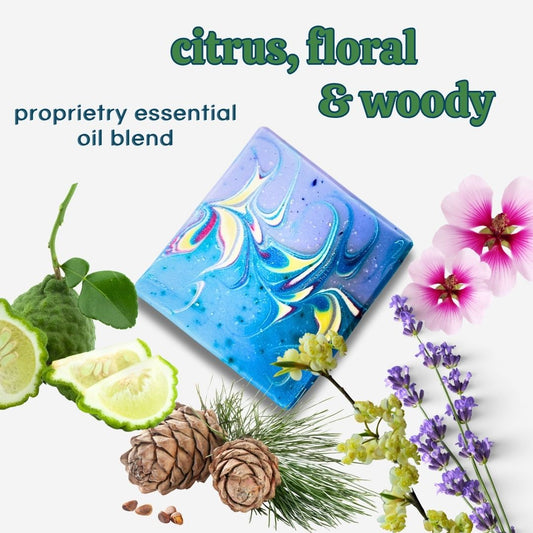
- Citrus Oils (Bergamot/Lime): Many cold-pressed citrus oils are phototoxic. If you wash with them and go into the sun, they can cause severe blistering burns.
At Sudsverse, we screen every essential oil against IFRA (International Fragrance Association) safety standards just as strictly as we do our synthetic fragrances. If a natural oil is too risky, we won't use it, no matter how natural it is.
2. The Endangered Forest: The Cost of Real Scents
Perhaps the darker side of the essential oil industry is the environmental devastation caused by the demand for rare woods.
To produce a tiny bottle of essential oil, you need a massive amount of plant material. For fast-growing crops like Lavender or Peppermint, this is fine. But for slow-growing trees? It is a disaster.
- Sandalwood (Santalum album): Real Indian Sandalwood is prized for its creamy, woody scent. However, the trees must be 30+ years old before they can be harvested, and the whole tree must be killed to extract the oil. Overharvesting has pushed this species to the brink of extinction in the wild.
- Rosewood (Aniba rosaeodora): Once a staple in perfumes, the massive demand for Rosewood oil has decimated the Amazon rainforest, leading to it being listed as an endangered species.
-
Oud (Agarwood): Known as liquid gold, Oud comes from the resin of infected Aquilaria trees. Poachers often cut down healthy trees in the hopes of finding the resin, destroying entire forests in Southeast Asia.
3. The Sudsverse Approach: Ethical Chemistry
This is why we choose Phthalate-Free Fragrance Oils in some of our soaps.
If you see Sandalwood on a Sudsverse label, know that it is a safe, ethical blend that smells like Sandalwood but didn't require killing a 50-year-old endangered tree to produce!
We believe that Sustainability is part of Safety.
We Use: Sustainable, fast-growing essential oils (Tea Tree, Eucalyptus, Peppermint, Lavender) that are farmed responsibly.
We Avoid: Endangered species (True Sandalwood, Rosewood, Oud) and toxic/sensitizing naturals (Wintergreen, Pennyroyal).
We Substitute: Safe, lab-created fragrances that give you the beautiful scent profile without the environmental destruction or the risk of chemical burns.
The Bottom Line
Don't be afraid of the word Synthetic, and don't blindly trust the word Natural. The safest ingredient is the one that has been researched, tested, and sourced with a conscience.